One continuous pipeline, from intent to a build-ready device.
Five stages, one model. Nothing gets re-entered, re-drawn or re-verified moving between them — the part you pick, the system you wire and the physics that validate it are the same record end to end.
Describe what you want to make.
AI-guided engineering notebooks turn a plain-language product intent into structured, reviewable requirements and a functional breakdown — the spine every later stage builds on.
- intent
- autonomous 5″ quadcopter
- functions
- traction · sensing · compute · power
- constraints
- payload · endurance · weight
- output
- structured spec → ready
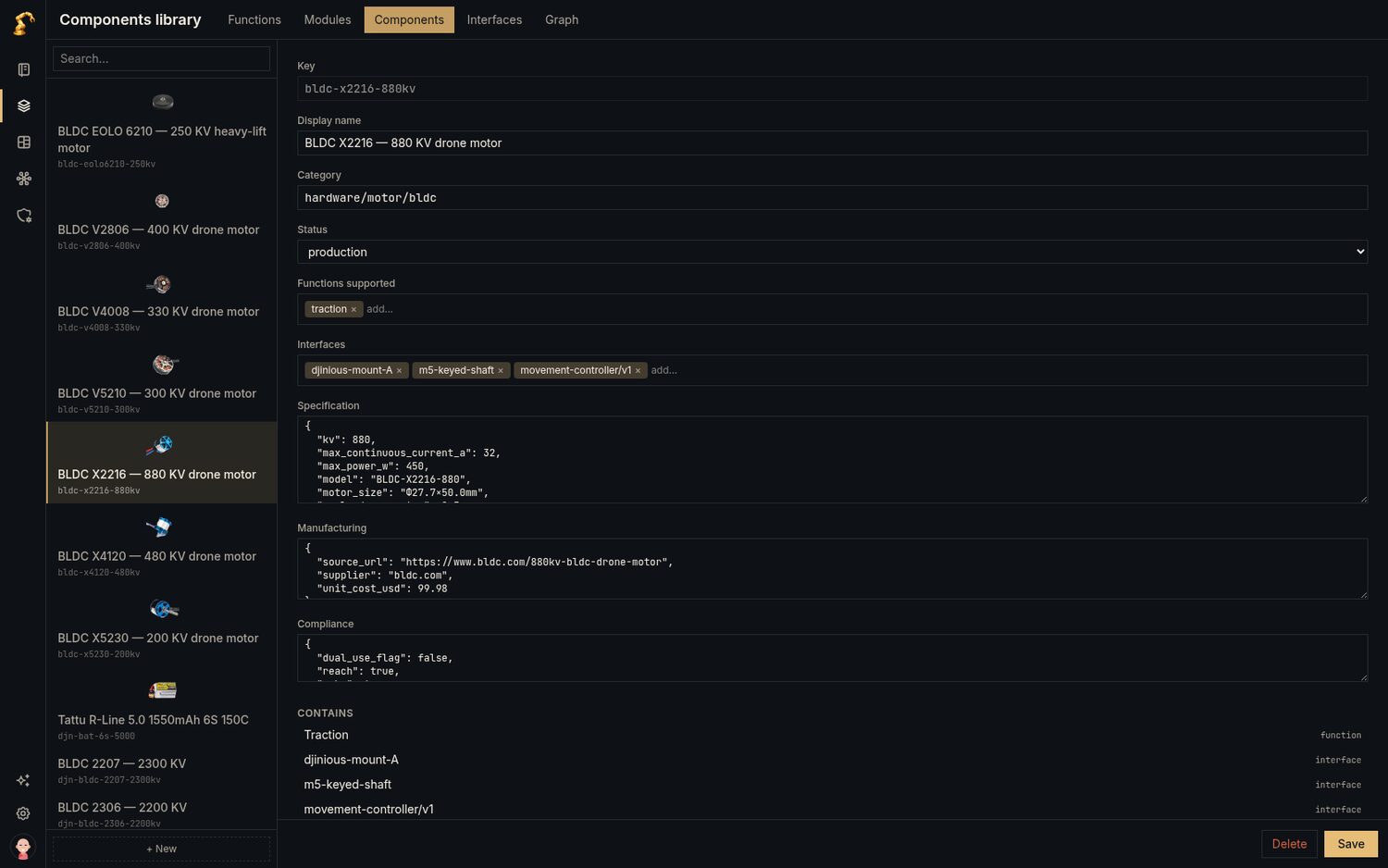
Real parts, simulation-ready.
Every component carries its full record — specification, interfaces, manufacturing source and unit cost, compliance flags — and a functional model. Pick a motor; you also picked its dynamics.
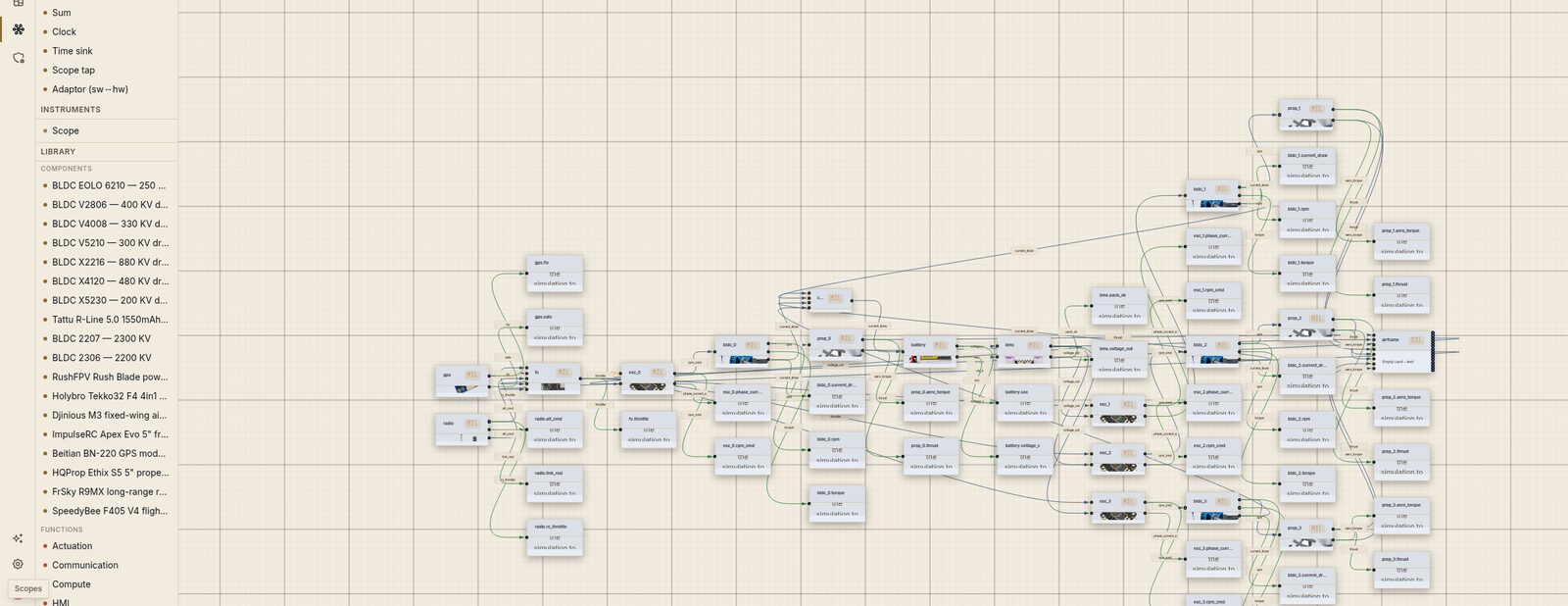
Compose the device as a system.
Wire the parts into a co-simulation on the canvas — radio, flight controller, ESCs, motors, propellers, battery, airframe — each block a real functional model exchanging real signals.
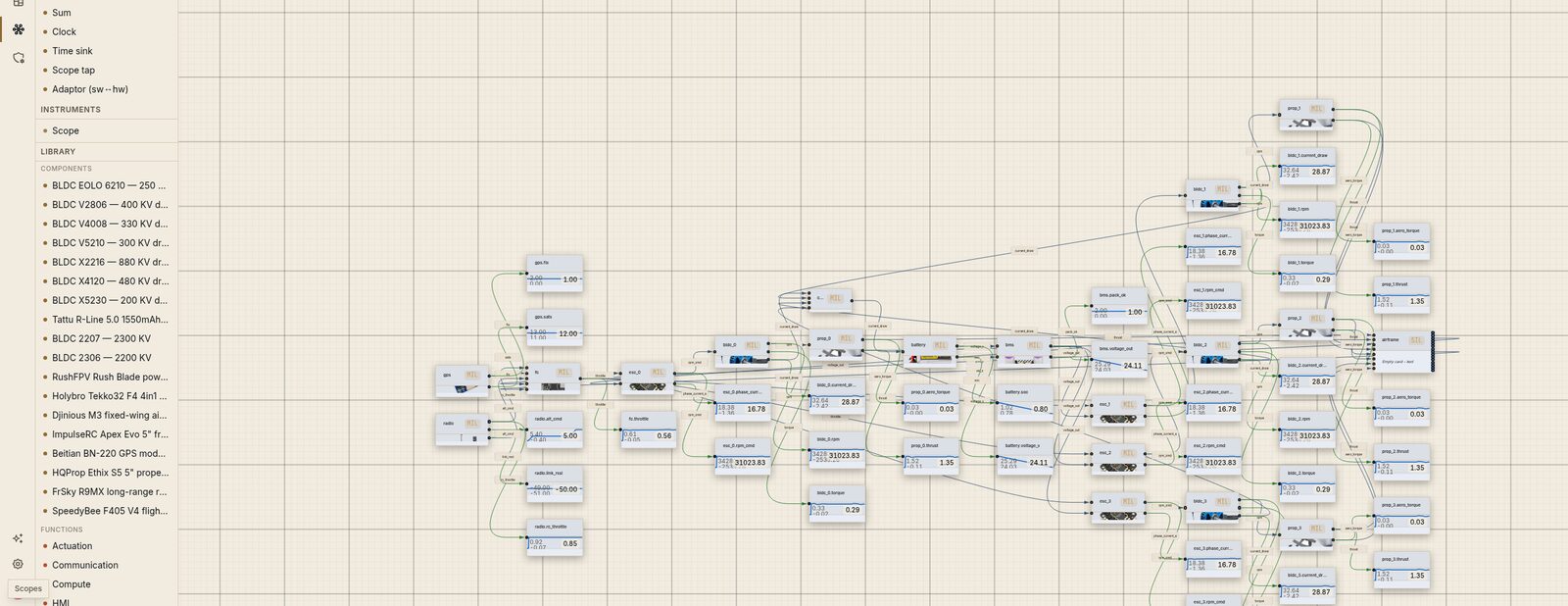
Isaac Sim closes the loop.
The airframe block is NVIDIA Isaac Sim: per-rotor thrust and torque from the functional models drive a 6-DOF PhysX rigid body on the GPU, and pose, IMU and GPS stream back into the running system — scopes, 3D twin and all.
Ship a build-ready package.
Bill of materials, interfaces, costs and manufacturing data are already attached to every part — the same model that flew in simulation becomes the package that goes to production.
See it running on your device.
Bring a real part list — we'll wire it, close the loop through Isaac Sim, and show you the physics.