
From product intent to a GPU-verified digital twin.
Djinious Workshop runs your device as a system of functional models and closes the loop through NVIDIA Isaac Sim rigid-body physics on the GPU — one workspace from requirements to a build-ready design.
Proven on the GPU
Intent in. Build-ready, physics-verified device out.
Three stages, one continuous model — nothing gets re-entered, re-drawn or re-verified moving between them.
Intent
AI-guided notebooks turn plain language into structured, reviewable requirements and a functional breakdown.
Library & system
Real parts with full records — spec, interfaces, cost, compliance, a functional model — wired into a live co-simulation on the canvas.
Twin & handoff
Isaac Sim closes the loop with 6-DOF GPU physics; the same model that flew in simulation ships as a build-ready package.
From canvas to closed-loop physics.
A system you wire on the canvas runs against real rigid-body dynamics on the GPU — same signals, same twin, validated end to end.
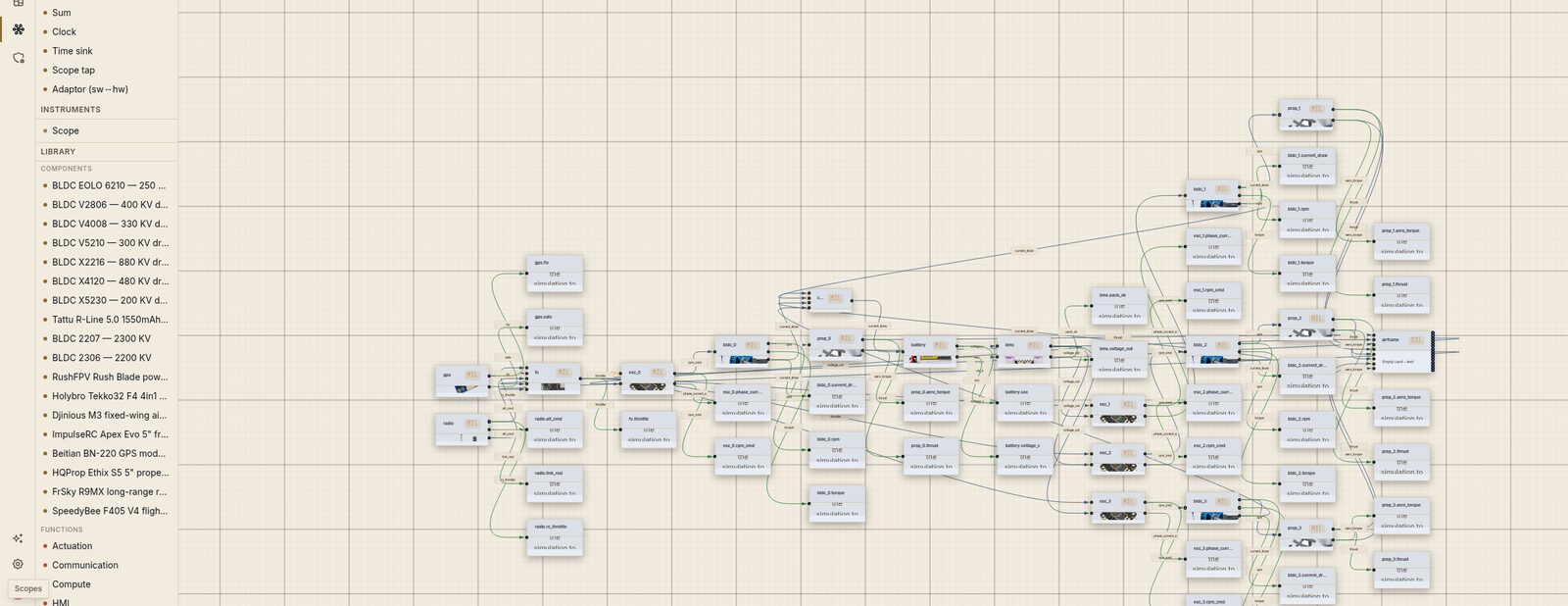
A drone becomes a system, one wire at a time.
Radio, flight controller, ESCs, motors, propellers, battery and airframe — each block a real functional model, wired into one co-simulation on the canvas.
- ModelEvery block is a real component record with a functional model attached.
- SimulateWire it and the co-simulation runs live — real signals, not stand-ins.
- GenerateThe system you wired on the canvas is the system that reaches the twin.
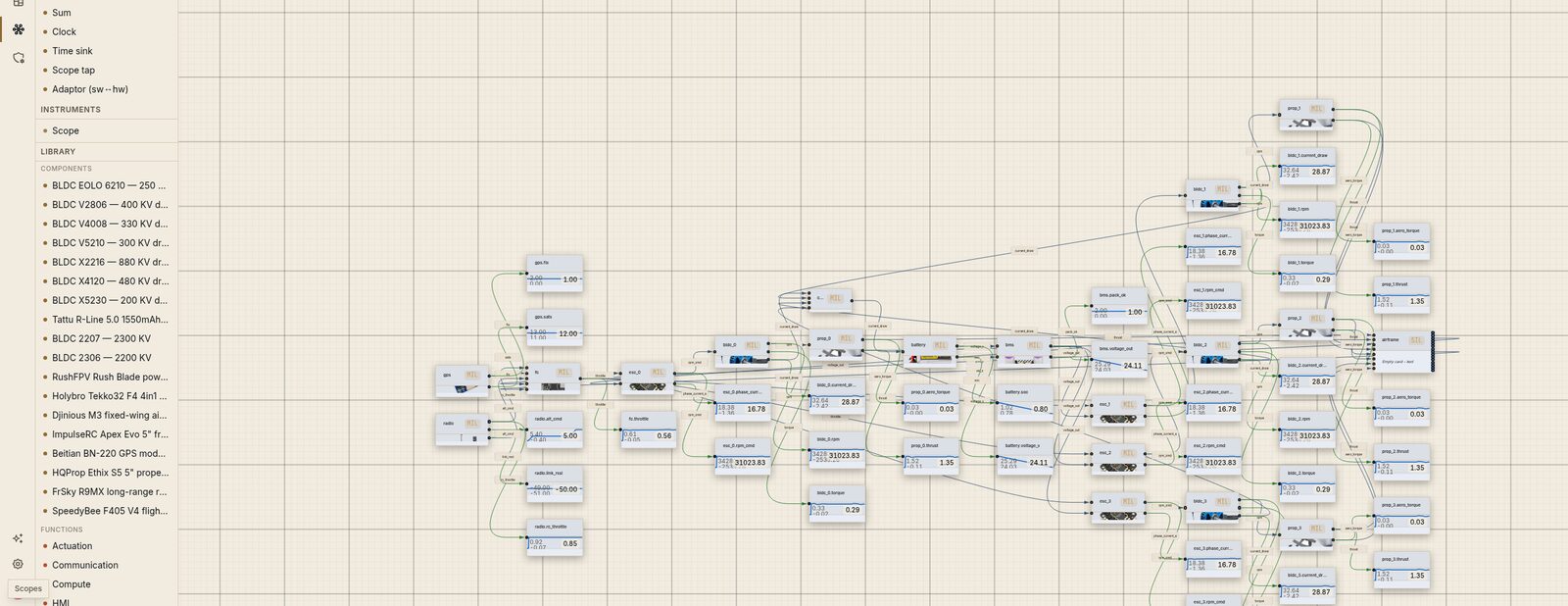
Isaac Sim closes the loop on the GPU.
The airframe block hands off to NVIDIA Isaac Sim: per-rotor thrust and torque from the functional models drive a 6-DOF PhysX rigid body, and pose, IMU and GPS stream straight back into the running system.
- ModelFunctional models compute thrust, torque and control at every step.
- SimulateIsaac Sim's PhysX engine resolves real rigid-body dynamics on the GPU.
- GeneratePose, IMU and GPS stream back — the twin and the design, in lockstep.
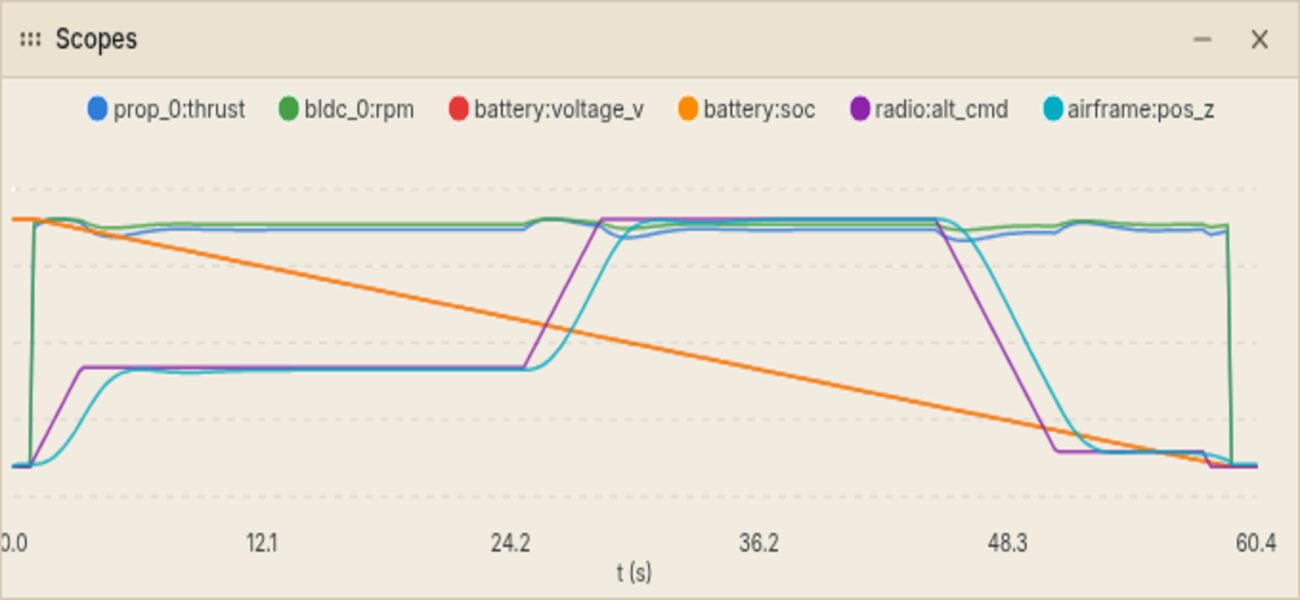
Watch the physics agree with the math.
Live scopes read airframe position and rate signals streamed back from Isaac Sim — the same signals a gated GPU test suite checks against a deterministic analytic model on every merge.
- ModelA deterministic 6-DOF analytic model gives the expected answer.
- SimulateIsaac Sim's GPU physics runs the same manoeuvre for real.
- Generate4/4 gated checks — reachability, hover, agreement — every merge.
Watch a design meet real physics.
Bring a real part list — we'll wire it, close the loop through Isaac Sim, and show you the physics.
Book a demo