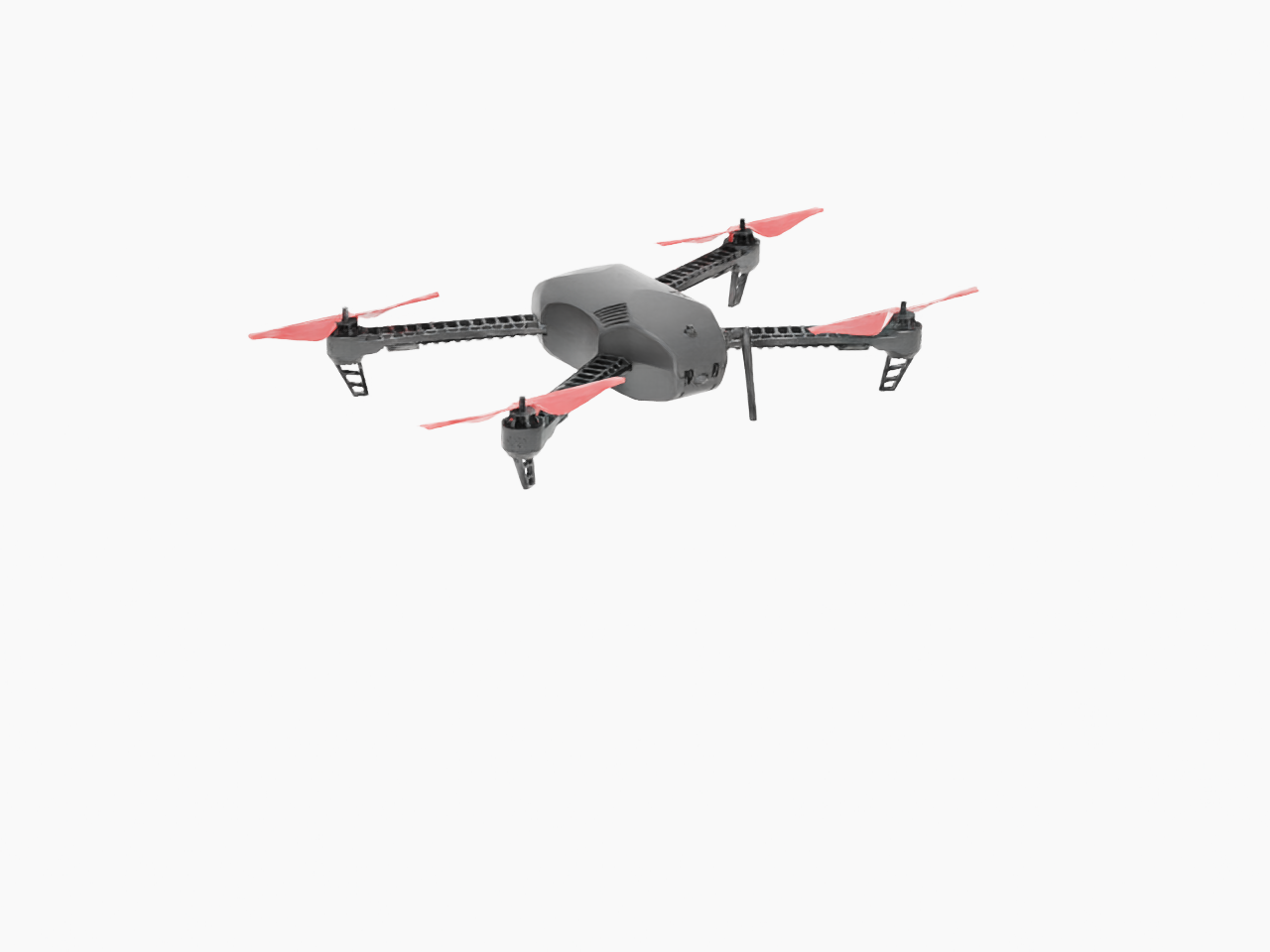
The physics is real — and we proved it.
Every merge to the airframe bridge runs a GPU-gated end-to-end suite against NVIDIA Isaac Sim — reachability, a level hover, and analytic agreement — before it ships.
| platform | NVIDIA DGX Spark · GB10 · aarch64 |
| engine | Isaac Sim 6.0.1 · PhysX 6-DOF |
| bridge reachability | ping → ok |
| hover · finite & level | imu_az = 9.81 m/s² |
| Isaac ⇄ analytic altitude | Δ < 0.5 m over hover |
| camera frame | RGBA · GB10 render |
| suite | 4 / 4 green |
Simulator meets the math.
Over the hover window, Isaac's PhysX altitude tracks our deterministic 6-DOF analytic model to within half a metre — the GPU simulation and first principles agree.
Real rigid-body dynamics.
Not a lumped curve fit: full body pose and orientation, native IMU, ground contact and per-rotor wrench — the same interface a real flight stack sees.
One bridge, two physics engines.
The airframe block speaks one small protocol to whatever is computing rigid-body physics underneath it — ping · connect · setInputs · step · getOutputs. Swap the fast analytic 6-DOF model for NVIDIA Isaac Sim's GPU rigid body and nothing upstream changes — every functional model, every wire on the canvas, every scope — because it's a change to one endpoint, not to the design.
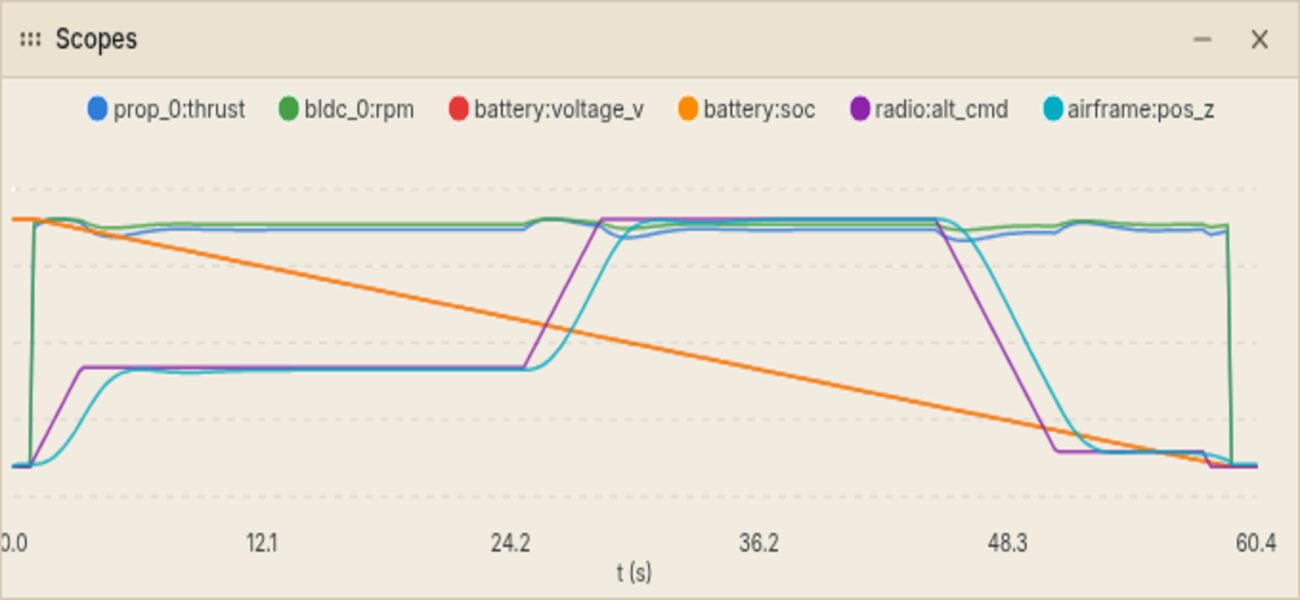
Replay the recorded flight.
A real take-off, hover and landing computed by the same functional models and NVIDIA Isaac Sim physics — drag to orbit, or let the camera do it.
The same scene, rendered.
Isaac Sim doesn't just compute the physics — it renders the scene those bodies live in, on the same GPU.